How to Modify Your Workout During an Arthritis Flare Instead of Skipping It Entirely
Quick Answer: During a mild-to-moderate flare, reducing range of motion, load, and duration — rather than stopping movement entirely — often manages symptoms better than complete rest, since gentle movement supports joint fluid circulation. Full rest is appropriate for severe flares with significant swelling or sharp pain.
The instinct during a flare is often all-or-nothing: push through the normal routine, or stop everything until it passes. Neither extreme usually serves the joint as well as scaling the same movement down.

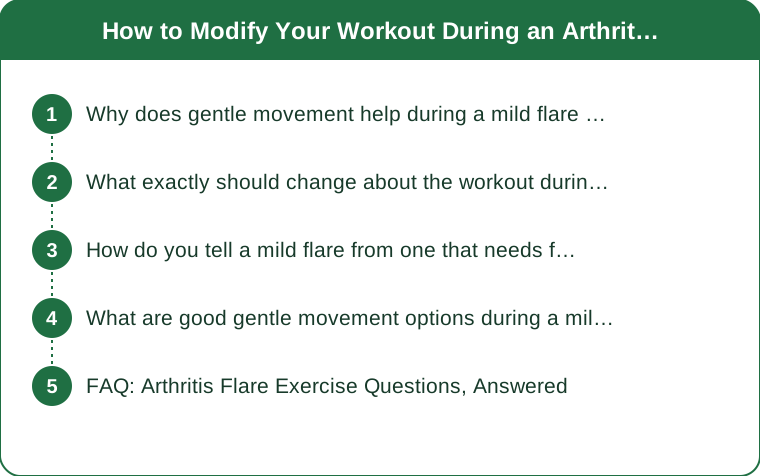
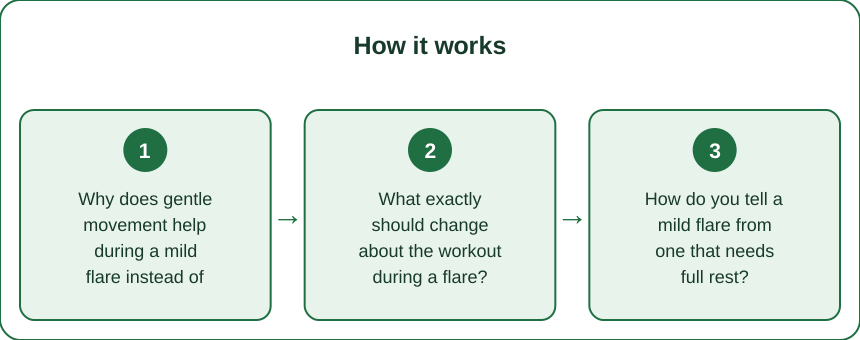
Why does gentle movement help during a mild flare instead of making it worse?
Joint fluid circulates through gentle, repeated movement, which can help reduce stiffness that builds up with prolonged stillness. Complete inactivity during a mild flare sometimes worsens stiffness once you do move again, beyond what the flare itself would cause.
This is different from pushing through pain — it’s specifically about maintaining gentle range of motion, not maintaining training intensity.
What exactly should change about the workout during a flare?
Reduce range of motion to a comfortable arc rather than full range. Cut load significantly — bodyweight or very light resistance instead of usual weights. Shorten duration to 10-15 minutes of gentle movement rather than a full session.
All three changes together, not just one, is what makes the difference between movement that helps and movement that aggravates.

How do you tell a mild flare from one that needs full rest?
Significant visible swelling, sharp or intense pain, or joint warmth/redness are signals for full rest and possibly a check-in with a doctor, not modified exercise. Mild stiffness, dull ache, or reduced range without acute pain is more typically the mild-to-moderate range where gentle modified movement is reasonable.
When in doubt about which category a flare falls into, err toward rest and a lower activity threshold rather than assuming it’s mild.
What are good gentle movement options during a mild flare?
Warm water movement if accessible, since warmth and buoyancy both reduce joint stress. Gentle range-of-motion sequences — slow, controlled joint circles well within comfortable range. Short, easy walks rather than any impact-based cardio.
The goal during a flare window is maintaining some circulation and mobility, not making training progress — that resumes once the flare settles.
FAQ: Arthritis Flare Exercise Questions, Answered
How long should modified, gentle movement continue during a flare before returning to normal training?
This varies by individual and flare severity, but generally continue modified movement until swelling and acute pain have meaningfully subsided, then return to normal intensity gradually rather than all at once.
Is it ever better to do nothing at all during a flare?
Yes — for severe flares with significant swelling or sharp pain, full rest and medical guidance are more appropriate than any exercise modification.
Does modified exercise during a flare help it resolve faster?
Some people find gentle movement supports faster stiffness resolution, though this varies individually — the priority during an actual flare is symptom management, not exercise progress. This is general information, not medical advice.
TL;DR:
- Mild-to-moderate flares often respond better to modified movement than complete rest
- Reduce range of motion, load, and duration together, not just one variable
- Significant swelling, sharp pain, or warmth/redness call for full rest instead
- This is general information, not medical advice — check with a doctor about flare management specific to your condition
A flare changes what movement should look like — it doesn’t have to mean stopping altogether.
Keep Reading
This article is for general informational purposes only and is not medical advice. Always consult a qualified health professional for guidance specific to you.