Which Arthritis Supplements Actually Have Evidence Behind Them — and Which Are Mostly Marketing
Quick Answer: Glucosamine/chondroitin and omega-3 fatty acids have the most consistent supporting evidence for joint comfort in arthritis, though effects are modest, not dramatic. Many trendier supplements have limited or mixed evidence — always check with a doctor before adding any, especially alongside existing medication.
Walk down any arthritis supplement aisle and you’ll find dozens of options promising relief. Some have real research behind them. Others have a compelling label and not much else. Here’s how to tell the difference.

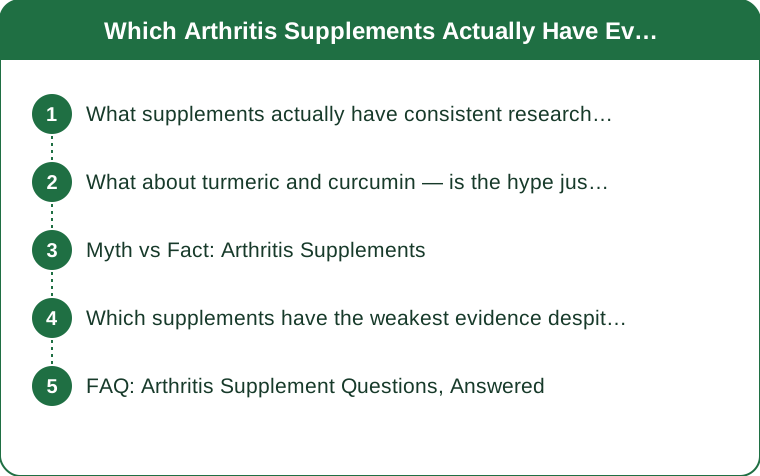
What supplements actually have consistent research support?
Glucosamine and chondroitin (often combined) have the largest body of research, though results across studies are mixed — some show modest pain reduction, especially in moderate-to-severe knee osteoarthritis, others show little difference from placebo. Omega-3 fatty acids (fish oil) have decent evidence for reducing inflammatory markers generally, with some specific support for rheumatoid arthritis symptom reduction.
Neither is a dramatic fix. Both are reasonable additions to discuss with a doctor if you’re already managing arthritis through other means.
What about turmeric and curcumin — is the hype justified?
There’s real but early-stage evidence here. Curcumin (turmeric’s active compound) has documented anti-inflammatory properties in lab studies, and some human trials show modest symptom improvement comparable to low-dose NSAIDs for certain people. The catch: curcumin is poorly absorbed on its own, so effectiveness depends heavily on the formulation (often needs black pepper extract or a specific delivery method to work at all).
A cheap turmeric capsule without absorption enhancement may be doing very little regardless of what the research on curcumin itself shows.

Myth vs Fact: Arthritis Supplements
Myth: ‘Natural’ supplements are automatically safe to combine with arthritis medication. Fact: Fish oil and turmeric can both interact with blood thinners — always check with a doctor or pharmacist before combining.
Myth: If a supplement doesn’t work in 2 weeks, it’s not working. Fact: Most supplements with real evidence (glucosamine, omega-3) take 4-8 weeks of consistent use to show any measurable effect.
Myth: More expensive supplements are more effective. Fact: Price often reflects marketing and formulation, not proven efficacy — check for third-party testing and dosage matching research amounts instead.
Which supplements have the weakest evidence despite heavy marketing?
Many joint-health blends with proprietary formulas, high-dose vitamin combinations claiming to ‘rebuild cartilage,’ and collagen supplements specifically for arthritis symptom relief have limited direct evidence compared to their marketing claims. This doesn’t mean they definitely don’t help anyone — it means the research base is thin or mixed, so approach these with realistic expectations rather than assuming strong backing exists.
A good rule of thumb: if a product claims to ‘reverse’ or ‘cure’ arthritis, that claim alone is a red flag regardless of the ingredient.
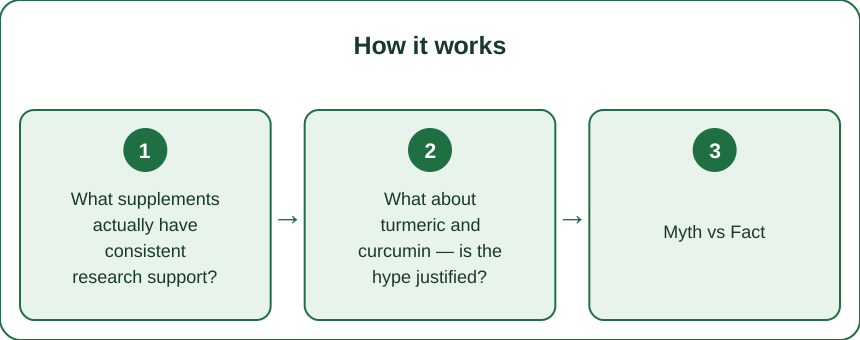
FAQ: Arthritis Supplement Questions, Answered
How long before I’d notice a difference from glucosamine or omega-3?
Most studies measuring benefit look at 4-8 weeks of consistent daily use — give it that long before deciding it isn’t working.
Should I tell my doctor before starting any arthritis supplement?
Yes, always — even ‘natural’ supplements can interact with common arthritis medications like blood thinners or NSAIDs.
Are supplements a replacement for prescribed arthritis treatment?
No — supplements are generally discussed as an addition to, not a replacement for, medical treatment. This is general information, not medical advice.
TL;DR:
- Glucosamine/chondroitin and omega-3s have the most consistent, though modest, evidence
- Curcumin shows promise but absorption formulation matters a lot
- Many trendy joint blends have thin evidence despite big marketing claims
- Always check with a doctor before combining supplements with arthritis medication
Look past the label claims to the actual research base before spending on any new supplement. This is general information, not medical advice.
Keep Reading
This article is for general informational purposes only and is not medical advice. Always consult a qualified health professional for guidance specific to you.