What's the Best Time of Day to Exercise With Arthritis? The Answer Isn't the Same for Everyone
Quick Answer: Most people with arthritis do best exercising 1-2 hours after waking, once morning stiffness has partially eased with movement and a warm shower — not first thing, and not so late that joints have stiffened again from inactivity.
Everyone says ‘morning workouts are best,’ but for arthritis, mornings are often when joints feel their absolute worst. The right timing question isn’t about willpower — it’s about your specific stiffness pattern.

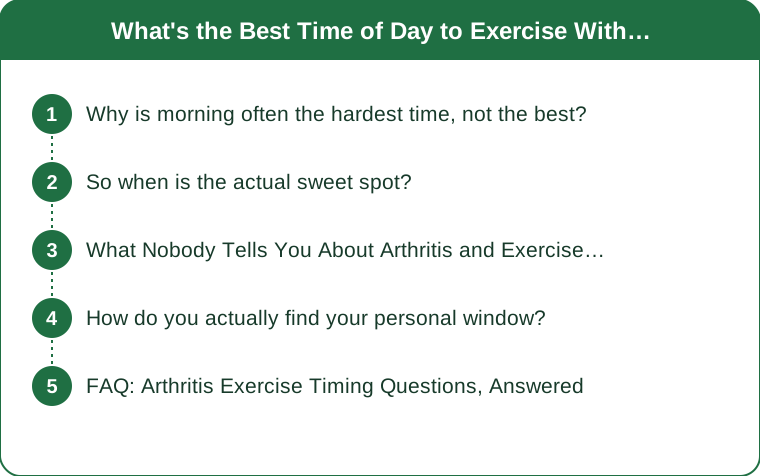
Why is morning often the hardest time, not the best?
Joint stiffness with arthritis tends to peak right after waking, often lasting 30-60 minutes or more as synovial fluid (the joint’s natural lubricant) needs time to redistribute after hours of stillness. Jumping straight into exercise during this window can feel harder and less effective than it should.
This is different from general fitness advice, where morning workouts are often recommended purely for consistency reasons — arthritis adds a physiological reason to wait, not just a scheduling one.
So when is the actual sweet spot?
For most people, 1-2 hours after waking — after a warm shower, some gentle movement, and morning stiffness has eased — hits the balance point: joints are lubricated enough to move well, but the day’s activity hasn’t yet caused a second wave of fatigue-related stiffness.
This isn’t universal, though. Some people with arthritis actually feel best in the late afternoon, once they’ve been moving all day and joints have ‘warmed up’ through normal activity.

What Nobody Tells You About Arthritis and Exercise Timing
Here’s what most generic advice misses: your best window can change week to week, especially with inflammatory arthritis types where flares shift the pattern. A time that worked great last month might feel wrong during a flare week.
The fix isn’t finding one perfect time and locking it in forever — it’s checking in with your body every few weeks and being willing to shift the window rather than forcing a schedule that used to work but currently doesn’t.
How do you actually find your personal window?
Track your stiffness level (1-10) at 3 points: right after waking, mid-morning, and late afternoon, for one week. The time slot with your lowest average stiffness score is your target window.
Start any session with 5-10 minutes of gentle warm-up movement regardless of the time you chose — cold joints benefit from an on-ramp no matter what part of the day it is.
FAQ: Arthritis Exercise Timing Questions, Answered
Should I skip exercise entirely on high-stiffness mornings?
Not necessarily skip — but scale down to gentle range-of-motion movement rather than a full workout, and save more intense exercise for your identified better window that day.
Does a warm shower before exercising actually help?
Yes — warmth increases blood flow and can ease stiffness enough to make movement more comfortable, which is why many people use it as a pre-exercise step.
When should arthritis-related stiffness be checked by a doctor instead of managed with timing alone?
If stiffness regularly lasts more than an hour, or a joint becomes suddenly swollen, red, or hot, that warrants a medical check rather than a timing adjustment. This is general information, not medical advice.
TL;DR:
- Morning stiffness (30-60+ min) often makes early workouts harder, not easier, with arthritis
- 1-2 hours after waking is the common sweet spot — some do better in late afternoon instead
- Your best window can shift week to week, especially during flares — recheck periodically
- Track stiffness 1-10 at 3 times of day for a week to find your personal pattern
Run the one-week stiffness tracking before locking in a schedule — guessing wastes weeks that tracking would settle in days.
Keep Reading
This article is for general informational purposes only and is not medical advice. Always consult a qualified health professional for guidance specific to you.