How to Adjust Your Arthritis Exercise Routine When the Weather Turns Cold
Quick Answer: Cold weather thickens joint fluid slightly and tightens surrounding muscles, which is why arthritis stiffness often feels worse in winter. A longer warm-up (10-15 minutes instead of 5), indoor movement on the coldest days, and layering to keep joints warm through the whole session are the main adjustments that help.
If your joints feel stiffer and workouts feel harder the moment temperatures drop, that’s a real physiological response, not just discomfort in your head — and it has specific, practical fixes.

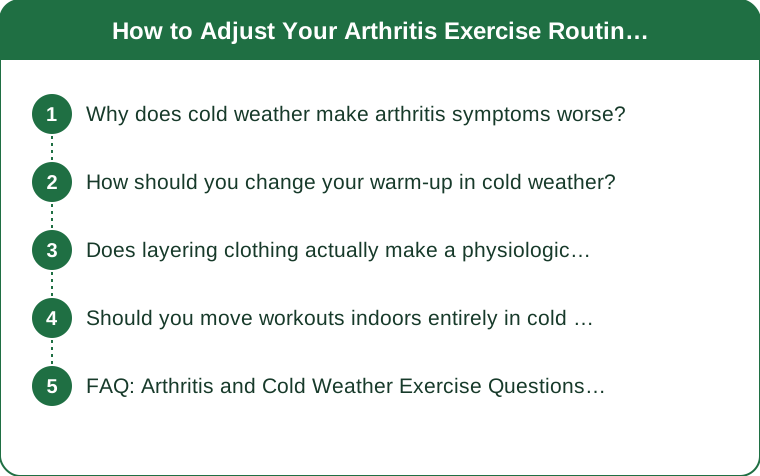
Why does cold weather make arthritis symptoms worse?
Cold temperatures can cause synovial fluid (the fluid lubricating joints) to thicken slightly, and surrounding muscles and tendons tend to tighten in response to cold, both of which reduce a joint’s natural range of motion and increase perceived stiffness. Barometric pressure changes that often accompany cold fronts are also commonly reported to affect joint discomfort, though the exact mechanism is still debated in research.
How should you change your warm-up in cold weather?
Extend your warm-up to 10-15 minutes, roughly double a typical warm weather warm-up, focusing on gentle, full-range movement of the joints you’ll be using rather than static stretching alone. Warming the room itself, if exercising indoors, or doing the warm-up in a warmer space before moving outside also measurably helps.

Does layering clothing actually make a physiological difference?
Yes — keeping joints, especially knees and hands, consistently warm throughout the session (not just during warm-up) helps maintain the loosened state achieved by warming up. Compression sleeves or simply an extra layer over commonly affected joints can maintain warmth through an outdoor session in a way a single warm-up alone can’t sustain.
Should you move workouts indoors entirely in cold weather?
On the coldest or most weather-variable days, moving to an indoor space — even just a heated room for the same routine — often means better range of motion and less discomfort than pushing through outdoors. This isn’t giving something up; it’s matching the environment to what the joints need that day, and outdoor days can resume once temperatures moderate.
FAQ: Arthritis and Cold Weather Exercise Questions, Answered
Should I skip exercise entirely on very cold days?
Not necessarily — moving indoors with an extended warm-up usually keeps the benefits of consistent movement without the added stiffness of cold air.
Does cold weather actually cause arthritis, or just worsen existing symptoms?
Cold weather doesn’t cause arthritis; it’s commonly reported to worsen the perceived stiffness and discomfort of existing arthritis, likely through fluid thickening and muscle tightening effects.
How long should a cold-weather warm-up be compared to summer?
Roughly double a typical warm-weather warm-up — 10-15 minutes versus 5 — focused on full-range gentle movement of the joints you’ll use that session. This is general information, not medical advice.
TL;DR:
- Cold weather thickens joint fluid and tightens muscles, worsening stiffness
- Extend warm-ups to 10-15 minutes in cold weather
- Layer to keep joints warm through the entire session, not just the warm-up
- Move indoors on the coldest days rather than skipping movement altogether
This is general information, not medical advice — persistent or worsening joint pain deserves a conversation with your doctor.
Keep Reading
This article is for general informational purposes only and is not medical advice. Always consult a qualified health professional for guidance specific to you.