Does Weather Actually Affect Arthritis Pain? What the Evidence Says
Quick Answer: Many people with arthritis report that weather affects their pain, and research has produced genuinely mixed results - some large studies find small associations with humidity and barometric pressure, others find none. The honest position is that any effect appears small and highly individual. What is well supported is that cold and inactivity both worsen stiffness, and both are manageable regardless of what the barometer does.
This question gets answered too confidently in both directions. Here is what the evidence actually supports.

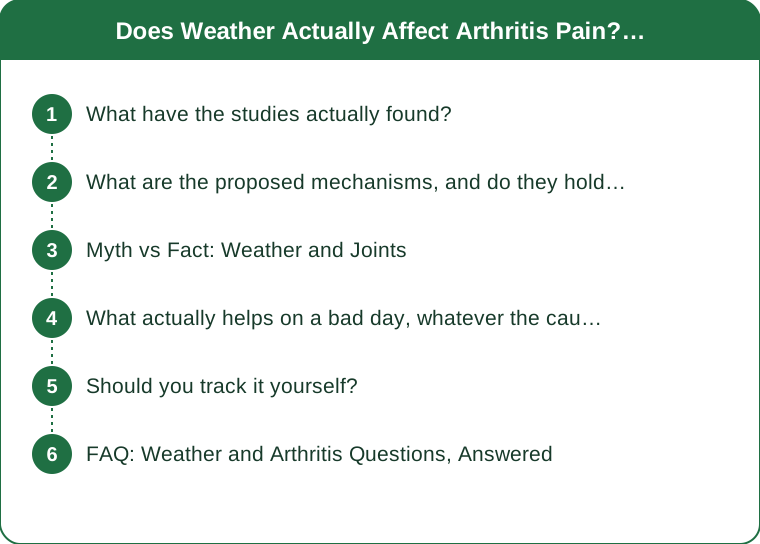
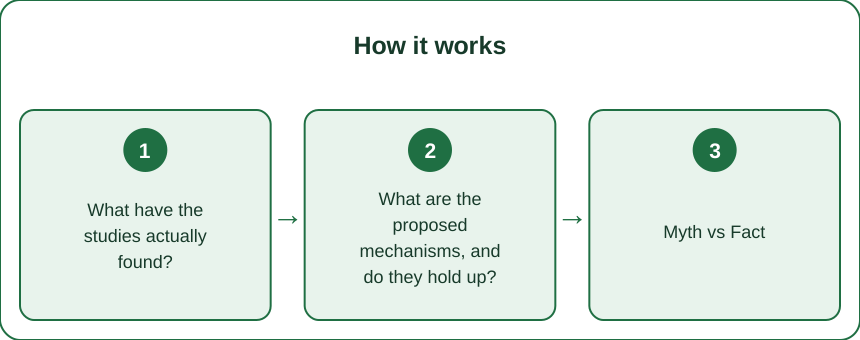
What have the studies actually found?
A genuinely inconsistent picture, and that inconsistency is itself the finding.
Some large studies have found small associations. Research using smartphone-reported symptoms across large numbers of participants has found modest correlations between higher humidity, lower pressure, and increased pain reports. The effects found are typically small in size.
Other well-designed studies have found nothing. Several analyses comparing individual pain reports against local weather records over long periods have found no meaningful relationship, including studies specifically looking at rainfall and clinic visits.
Why the disagreement is hard to resolve: pain reporting is subjective and influenced by expectation, weather variables are correlated with each other and with behaviour, and people move indoors when weather is bad - which changes activity levels, and activity independently affects joint pain.
There’s also a recall issue. If you believe weather affects your joints, you’re more likely to notice and remember the days when both were bad, and less likely to register the days when they didn’t line up. That isn’t a criticism of anyone’s experience - it’s a well-documented feature of how humans track correlations, and it’s precisely why controlled studies are needed.
What are the proposed mechanisms, and do they hold up?
Three are commonly offered, with varying levels of support.
Barometric pressure and joint expansion. The idea is that falling atmospheric pressure allows tissues around joints to expand slightly, increasing pressure on nerves. It’s plausible in principle. The pressure changes involved in normal weather systems are small, and evidence that they produce clinically meaningful tissue change is limited.
Cold and tissue stiffness. This one has the firmest footing. Cold genuinely reduces tissue elasticity, slows nerve conduction, and increases muscle tension, all of which can make a joint feel stiffer and more painful. This isn’t controversial and it doesn’t require any exotic mechanism.
Humidity and inflammation. The least supported of the three. There’s no well-established pathway by which ambient humidity would affect joint inflammation directly, though it may affect comfort and sleep quality, which affect pain perception.
The practical read: the cold mechanism is real and addressable. The others may or may not be, and either way the response is the same.
Myth vs Fact: Weather and Joints
Myth: People with arthritis can predict rain. Fact: This is one of the most persistent beliefs and one of the least supported by controlled research. Studies specifically testing prediction accuracy have generally not found it.
Myth: Moving to a warm, dry climate cures arthritis. Fact: There’s no good evidence that relocation changes disease progression. Some people report feeling better, which may reflect comfort, more outdoor activity, and more sunlight rather than any change in the underlying condition. It’s an expensive intervention with uncertain returns.
Myth: If the studies are mixed, people are imagining it. Fact: No. Mixed results mean the effect is small, inconsistent between individuals, or hard to isolate - not that reported experience is invented. Pain is real regardless of what causes it.
Myth: Cold weather causes arthritis. Fact: Cold may affect how joints feel; it doesn’t cause osteoarthritis or rheumatoid arthritis. The causes are quite different and well studied.
Myth: Damp weather makes inflammation worse. Fact: There’s no established mechanism for ambient humidity affecting joint inflammation. Damp weather does keep people indoors and sedentary, which does affect stiffness.

What actually helps on a bad day, whatever the cause?
The interventions are the same regardless of which mechanism you believe.
Keep moving, especially when you least want to. Inactivity is the most reliable amplifier of joint stiffness, and bad weather is the most reliable driver of inactivity. This is likely a substantial part of the weather-pain association: it isn’t the pressure, it’s the four days you didn’t leave the house.
Warmth applied directly. Heat packs, warm baths, and heated clothing all reduce the tissue-stiffness effect of cold. This addresses the one mechanism with solid support.
Layer the joints specifically. Knees, hands, and hips benefit from targeted warmth more than general room heating. Long sleeves, thermal leggings, and gloves are genuinely useful for people whose hands are affected.
Morning routine matters more on cold days. Gentle range-of-motion movement before getting out of bed, and a warm shower before activity, both reduce the morning stiffness that cold amplifies.
Indoor movement options ready in advance. A plan for what you do when it’s grim outside - a home routine, a pool session, a mall walk - is what prevents the inactivity spiral. Deciding this in October is easier than deciding it on a wet Tuesday in January.
Should you track it yourself?
It’s worth doing once, carefully, and then acting on what you find.
Track for six to eight weeks minimum. Note daily pain on a simple 0-10 scale, plus activity level, sleep quality, and the day’s weather. Shorter periods don’t produce enough variation to be informative.
Record pain before you check the forecast. This is the single most important methodological detail in a personal log. Knowing a storm is coming shapes how you rate your pain, and the log becomes circular.
Include activity and sleep, because both affect pain more consistently than weather does in most studies, and without them you’ll attribute their effects to the weather.
What to do with the result: if you find a consistent pattern, you can plan around it - scheduling demanding activities on better days, being more diligent with warmth and movement on worse ones. If you find no pattern, that’s useful too, because it redirects attention to the variables that are actually driving your pain.
And bring the log to your appointments. A structured record of pain, activity, and sleep over two months is genuinely useful clinical information, far more so than a general sense that things have been worse lately.
This is general information, not medical advice. Arthritis management - medication, physiotherapy, and treatment decisions - belongs with your doctor or rheumatologist, and a change in your pattern of symptoms is worth reporting rather than attributing to the season.
FAQ: Weather and Arthritis Questions, Answered
So does weather affect arthritis or not?
The evidence is mixed, and any effect appears small and individual. Cold affecting tissue stiffness is the best-supported piece of it.
Why do so many people report it if the evidence is weak?
Pain reporting is subjective, weather changes behaviour and activity, and humans are strongly inclined to notice confirming instances. That doesn’t make anyone’s pain less real.
Would moving somewhere warmer help?
There’s no good evidence it changes the condition. Some people feel better, likely due to comfort and increased outdoor activity - both of which you can partly replicate where you are.
Is heat or cold better for arthritis pain?
Generally heat for stiffness and cold for acute swelling, though this varies by condition and by person. Worth asking your doctor or physiotherapist for guidance specific to your case.
TL;DR:
- Research is genuinely mixed; where associations are found, the effects are small
- The cold-and-tissue-stiffness mechanism has the firmest support and is directly addressable
- Weather’s biggest reliable effect may be indirect: bad weather means less activity
- Keep moving, apply targeted warmth, and have an indoor plan ready before you need it
- If you track it, record pain before checking the forecast, and include sleep and activity
The barometer is a poor lever. Movement and warmth are levers you actually control.
Keep Reading
This article is for general informational purposes only and is not medical advice. Always consult a qualified health professional for guidance specific to you.