Move With Arthritis: Motion Is Lotion — The Joint-Kind Workout Guide
Quick Answer: Modern guidelines recommend exercise as first-line arthritis treatment, not rest — strength training, low-impact cardio (especially water-based), daily range-of-motion work, and balance training all reduce pain and improve function. On flare days, downshift the intensity rather than stopping completely, and use the two-day rule to tell adaptation soreness from a real problem.
Arthritis advice used to be ‘rest and protect’ — modern guidelines say nearly the opposite: exercise is first-line treatment, strong muscles are joint medicine, and motion genuinely is lotion. The joint-kind training guide. (Info; your clinician and physio lead the plan.)

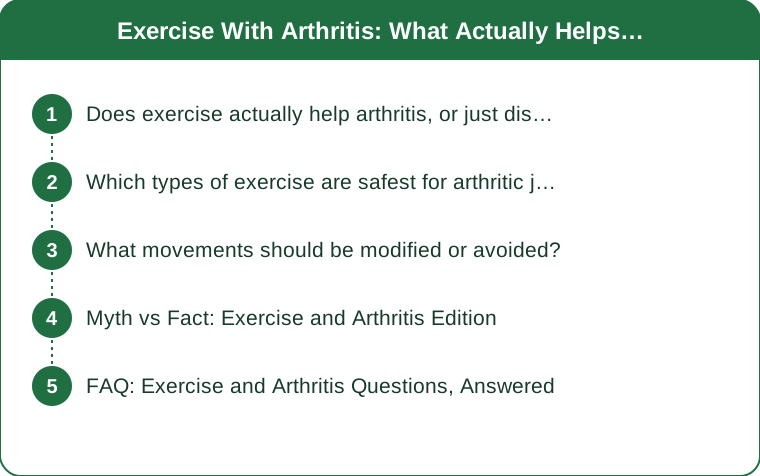
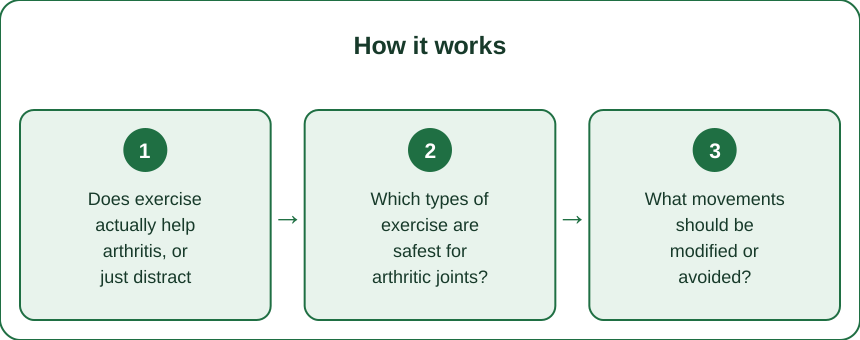
Why is exercise recommended for arthritis now?
The updated science: exercise is a first-line recommendation in every major osteoarthritis guideline (strength and movement reduce pain and improve function on par with common medications in trials — without the side-effect ledger), cartilage LIKES cyclic loading (the rest-it-completely era misread the tissue — joints are built to move and nourished by motion), and the fear-avoidance spiral is the real enemy (pain → less movement → weaker muscles → more joint load → more pain; exercise is the spiral’s reverse gear).
What’s the best type of exercise for arthritic joints?
The training toolkit: strength work leads (strong quads are knee armor — step-ups, bridges and controlled squats at joint-respecting ranges, 2-3 sets of 10-15 reps; machines shine here for guided paths), low-impact cardio carries the engine (the elliptical, cycling, water work — water workouts are arthritis royalty: buoyancy unloads while resistance trains, aim for 20-30 minutes), range-of-motion daily (the gentle full-range tour keeps what you have — a few minutes every morning), and the balance tier (arthritic joints sense position less precisely; targeted balance work compensates). The tai chi note: some of the strongest arthritis-exercise evidence in existence — graceful, weight-shifting, joint-gentle.

How do I handle a flare-up without losing progress?
Working WITH the condition: the two-day rule (pain that settles within a day or two of new exercise is adaptation talking; pain that escalates or lingers means scale back — the traffic-light system physios teach), flare days downshift rather than stop (the hard session becomes the pool walk or the range-of-motion tour — motion maintained at whisper volume), morning stiffness is a warm-up argument not a rest argument (joints that start slow appreciate gentle circles before demands), and the load-management wisdom (spiky weekend-warrior patterns provoke; boring consistency soothes — a twice-weekly steady rhythm suits arthritic joints beautifully).
Myth vs Fact: Arthritis and Exercise
Myth: Rest is the safest option for arthritic joints. Fact: Prolonged rest weakens the muscles that support the joint, often making pain worse over time. Guided motion is now the evidence-backed choice.
Myth: If it hurts, you should stop entirely. Fact: Mild, settling discomfort during and briefly after exercise is often normal adaptation. Sharp, worsening, or lingering pain is the real stop signal — that’s the two-day rule in action.
Myth: Exercise can’t really change an arthritis diagnosis. Fact: While exercise doesn’t reverse joint damage, it measurably reduces pain and improves function — often on par with common medications in clinical trials.
What else helps arthritis symptoms alongside exercise?
The rest of the toolkit: weight management where relevant (each kilogram off is multiplied relief at the knee — the mechanics are generous), footwear and surfaces (cushioned shoes, forgiving ground — the concrete-versus-track choice matters more with arthritis), heat before and cool after (the warm-up and the post-session ice preference are both legal — comfort guides), and the professional tier (a physio-designed program is the gold standard start; the exercise-is-medicine referral is worth requesting).
FAQ: Arthritis Exercise Questions, Answered
Q: Is walking good for arthritis? Yes — walking is one of the most accessible low-impact options, especially on forgiving surfaces with supportive shoes.
Q: Should I exercise every day with arthritis? Some gentle movement (range-of-motion, walking) most days is ideal; harder strength sessions usually work best 2-3x a week with rest or light-activity days between.
Q: When should I see a professional before starting? If you have significant pain, swelling, a recent flare, or you’re unsure which exercises are safe for your specific joints, a physio-designed program is the safest starting point.
TL;DR:
- Exercise is now first-line arthritis treatment, not something to avoid
- Strength training, water-based cardio, daily range-of-motion, and balance work all help
- Two-day rule: settling soreness is normal, escalating or lingering pain means scale back
- On flare days, downshift intensity rather than stopping completely
The reframe that changes trajectories: arthritis is a condition you TRAIN with, not retire from — and the training is the treatment. Strength is joint armor, water unloads, flares downshift not stop, consistency soothes. Motion is lotion — the guidelines finally agree with the joints.
Keep Reading
This article is for general informational purposes only and is not medical advice. Always consult a qualified health professional for guidance specific to you.